
At least once a week, someone asks me the same question. A client, mid-brief, hesitating: "What software should we edit this in?" A younger editor, just starting out, messaging me late at night: "Bhai, which one should I learn — Premiere or DaVinci? Which one's actually the best?" I used to answer straightaway. These days I ask something else first.
01 What Pen Did Shakespeare Write Hamlet With?
Take a second before you answer. Don't look it up. Sit with the question the way most people sit with "which software is best" — certain there's a real, important answer waiting on the other side of it.
Now here's another one. What brand of paint did Van Gogh use for The Starry Night? What paper did Beethoven compose his Ninth Symphony on — the one he wrote after he'd already gone completely deaf, and never once heard performed?
02 It Was Never the Pen
Nobody teaches you the answers to those questions in film school or art history class, and there's a reason for that: the answers don't matter, and somewhere underneath the original question, everyone already knows it.
Shakespeare almost certainly wrote with an ordinary quill — a sharpened goose feather, the most common writing tool of his era — dipped in ink he likely mixed himself, on paper that would have cost a few pence at any stationer in London. Van Gogh's paints were the cheap, mass-produced tubes any working painter in Arles could buy off a shelf. Beethoven's manuscript paper was standard stock, the same sheets every court composer in Vienna scribbled on and forgot within the year.
None of it was special. None of it was "the best." It was just whatever happened to be in front of them that day.
What made Hamlet Hamlet was never the pen. It was everything happening in the hand holding it.
03 What Actually Made the Work Good
What made Hamlet Hamlet wasn't the quill — it was years of watching how people betray each other, how grief actually sounds when nobody's performing it for an audience, how a single hesitation on stage can say more than a monologue. The pen just kept up. It didn't create any of that, and it couldn't have, no matter how good a pen it was.
This is the part everyone skips on the way to asking about software.
04 Video Editing Software Is the Same Kind of Tool
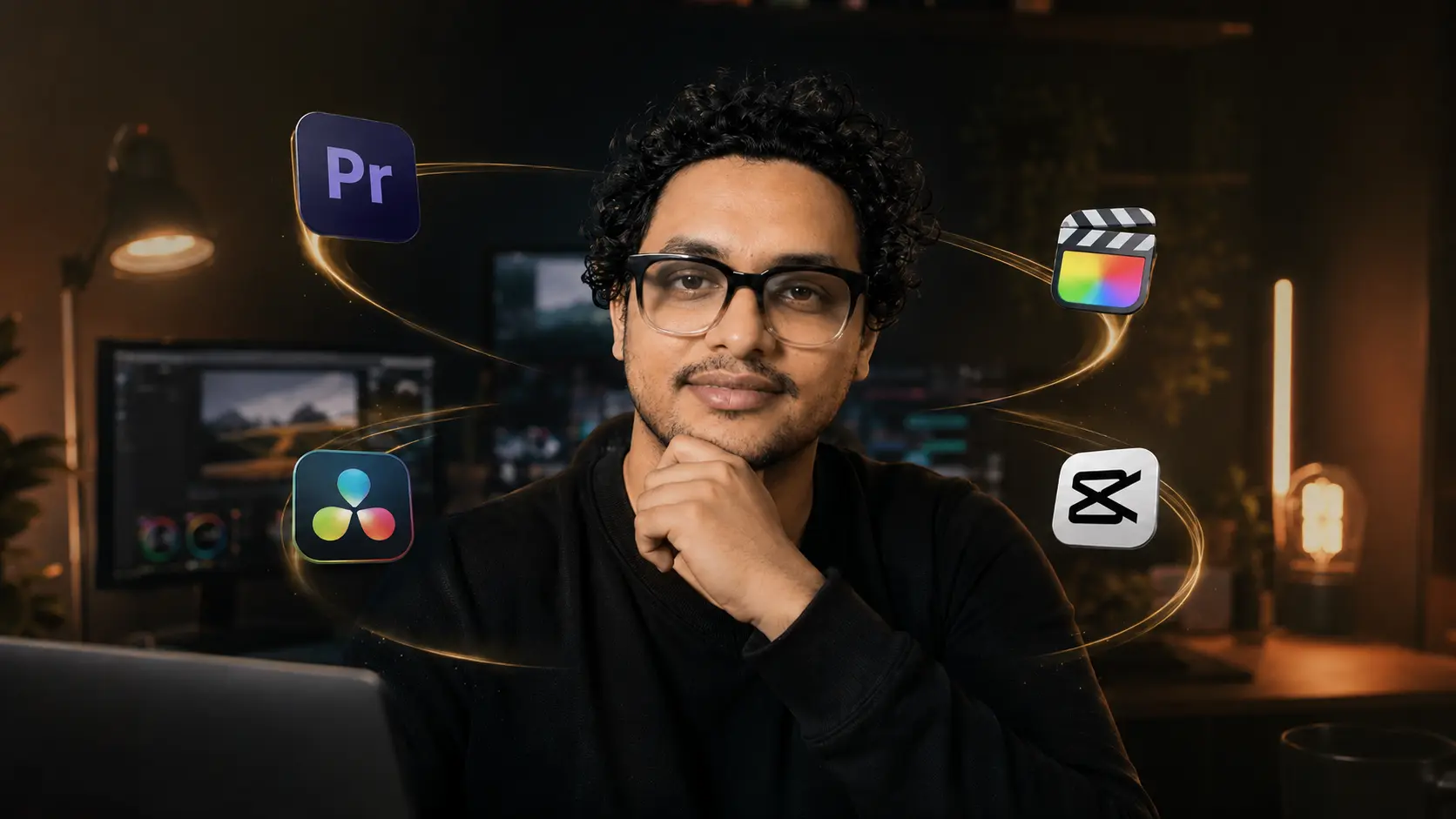
Premiere Pro, DaVinci Resolve, Final Cut Pro, CapCut — these are pens. Some have more features than others. Some are free, some cost a monthly fee, some only run on a Mac. But not one of them has ever, on its own, cut a video that made someone tear up, or laugh out loud, or stay past the ten-second mark instead of scrolling away. That happens because of decisions nobody sees in the interface — where the cut lands, what gets to breathe, what gets removed before the audience gets bored of it, how silence gets used instead of filled.
I've watched editors do extraordinary work in software I personally find clunky and unintuitive. I've also watched people with access to every tool the industry makes produce something flat, frame-accurate, and completely lifeless. The software was never the variable that mattered.
05 So Which One Should You Actually Use?
Since the honest answer clearly isn't "none of it matters, pick anything" — here's the practical version, broken down by what you're actually trying to do:
- Premiere Pro. The industry default for a reason: deep integration with After Effects and Photoshop, a huge ecosystem of tutorials and plugins, and it's what most agencies and editors-for-hire already know. Subscription-based. My own daily tool, for what it's worth.
- DaVinci Resolve. Arguably more powerful than Premiere for color grading, and the free version is genuinely — not a trick version — capable of professional work. The steeper learning curve is the real cost, not the price tag.
- Final Cut Pro. Fast, efficient, Mac-only, and a one-time purchase instead of a subscription. A strong choice if you're already inside Apple's ecosystem and don't need to collaborate with Windows-based teams.
- CapCut. Free, mobile-friendly, built for short-form. Not a "lesser" tool for beginners so much as a different tool for a different deliverable — plenty of professional TikTok and Reels editors work almost entirely inside it.
Pick based on your platform, your budget, and who you need to collaborate with. Then stop shopping.
06 Where to Actually Spend Your Energy
Every hour spent comparing software is an hour not spent learning the things that actually separate a good edit from a forgettable one: pacing, structure, restraint, sound design, knowing when a cut should be invisible and when it should be felt. Those skills transfer completely between every piece of software mentioned above. Software preferences don't transfer into a single one of them.
I edit almost everything in Premiere Pro, for no more romantic a reason than that I learned it first, and every shortcut, every plugin, every bit of muscle memory I have is built around it. I didn't get better at editing because of Premiere. Premiere became useful in my hands because of things I already understood about pacing and story before I'd ever opened it.
Hamlet wasn't written by a pen. If you're a client deciding who to hire, or an editor deciding what to learn next, that's the only answer worth remembering — ask about the eye behind the cut, not the software running it. The tool holding a story together has never been the one doing the telling.